Few places in the world possess the mystical charm of this tiny strip of land, one of the most isolated places on the planet, where it is already difficult to feel a connection with Chile, which lies more than 3700 kilometres to the east, let alone with the rest of the world. With its enigmatic statues, the well-known moai, Easter Island(Rapa Nui for its Polynesian inhabitants) exudes an aura of mysterious fascination.

The enigmatic moai of Ahu Akivi, Easter Island ©Eric Lafforgue/Lonely Planet
ButEaster Island is more than just an open-air museum. Scuba diving, snorkelling and surfing are great here, while on the mainland there's no more eco-friendly way to take in the island's wild beauty than on foot, bike or horseback. If you just want to recharge your batteries, a couple of magnificent stretches of white sand await you.
Easter Island is now world-famous and visitors are increasing, but tourism here is still small-scale and based on eco-friendly principles. If you can make it to this paradise, here are eight attractions not to be missed.

Moai on the Rano Raraku volcano ©Olga Danylenko/Shutterstock
1 Rano Raraku, the 'nursery' of moai.
Called 'the nursery ', the Rano Raraku volcano, about 18 kilometres from Hanga Roa, is the quarry from which the tuff blocks used to carve the moai were extracted. Wandering among dozens ofmoaiin all their various stages of creation, scattered along the southern slopes of the volcano, you will feel as if you have been catapulted back in time to the dawn of Polynesian civilisation. At the summit, the 360° view is truly spectacular. Inside the crater, there is a small shimmering lake and some 20 moai in a standing position.
On the south-eastern slope of the mountain, look for the Tukuturi, an unusual statue in a crouching position: the body is seated on its heels and the hands and forearms are resting on the thighs.
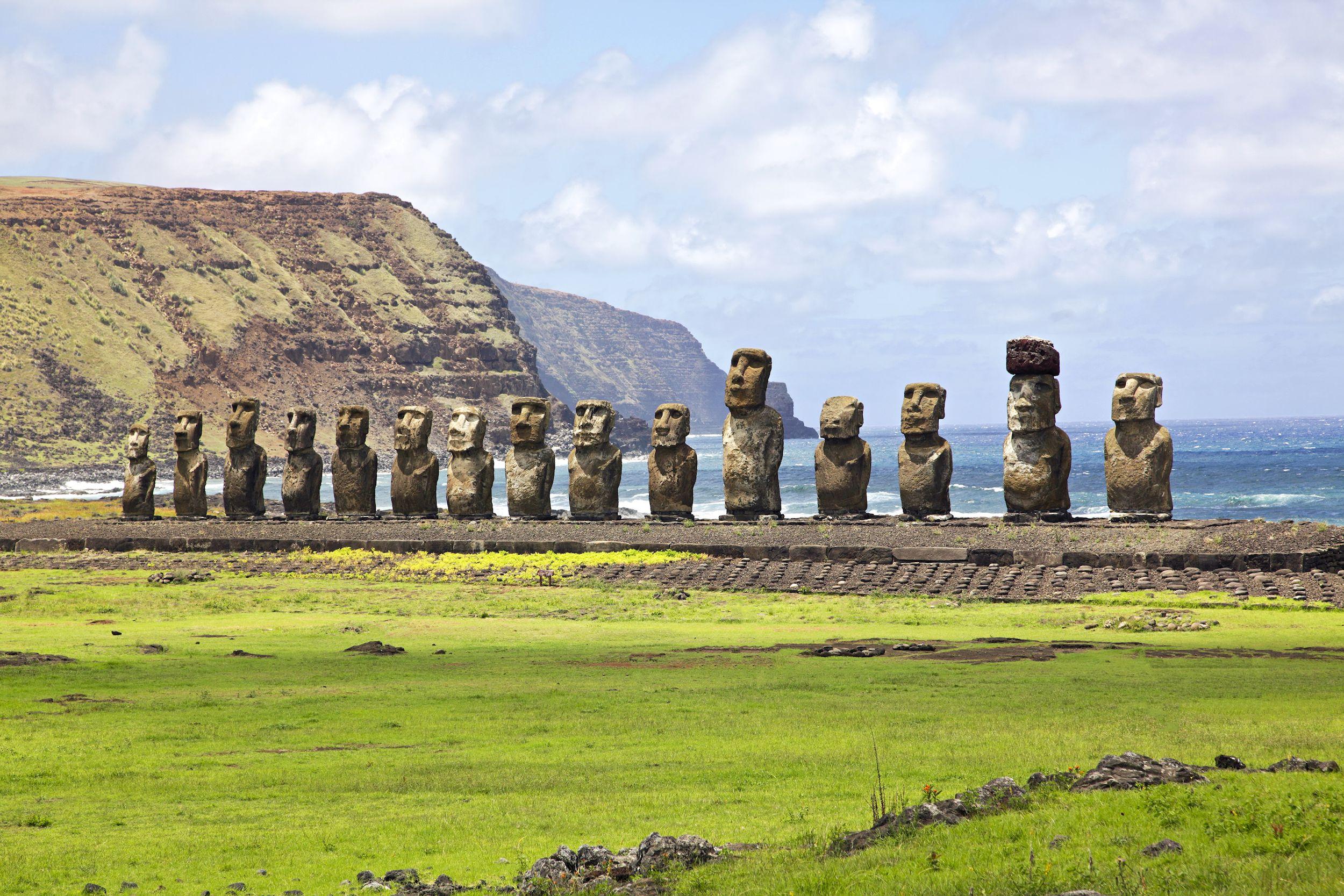
Ahu Tongariki, the largest ahu ever built ©Bryan Busovicki/Shutterstock
2 The enigmatic Ahu Tongariki
The monumental Ahu Tongariki is sure to be the subject of many of your photos. With its 15 imposing statues, it is the largest ahu ever built. The statues look towards a large razed village, where some scattered ruins and a few petroglyphs are still visible. Among the various figures can be seen a turtle with a human face, a tuna and a bird-man.
The site was restored by a Japanese team between 1992 and 1996; in 1960 a tsunami had knocked down the statues and hurled several hairstyles further inland. One of the hairstyles is now back in place, on the head of a moai.
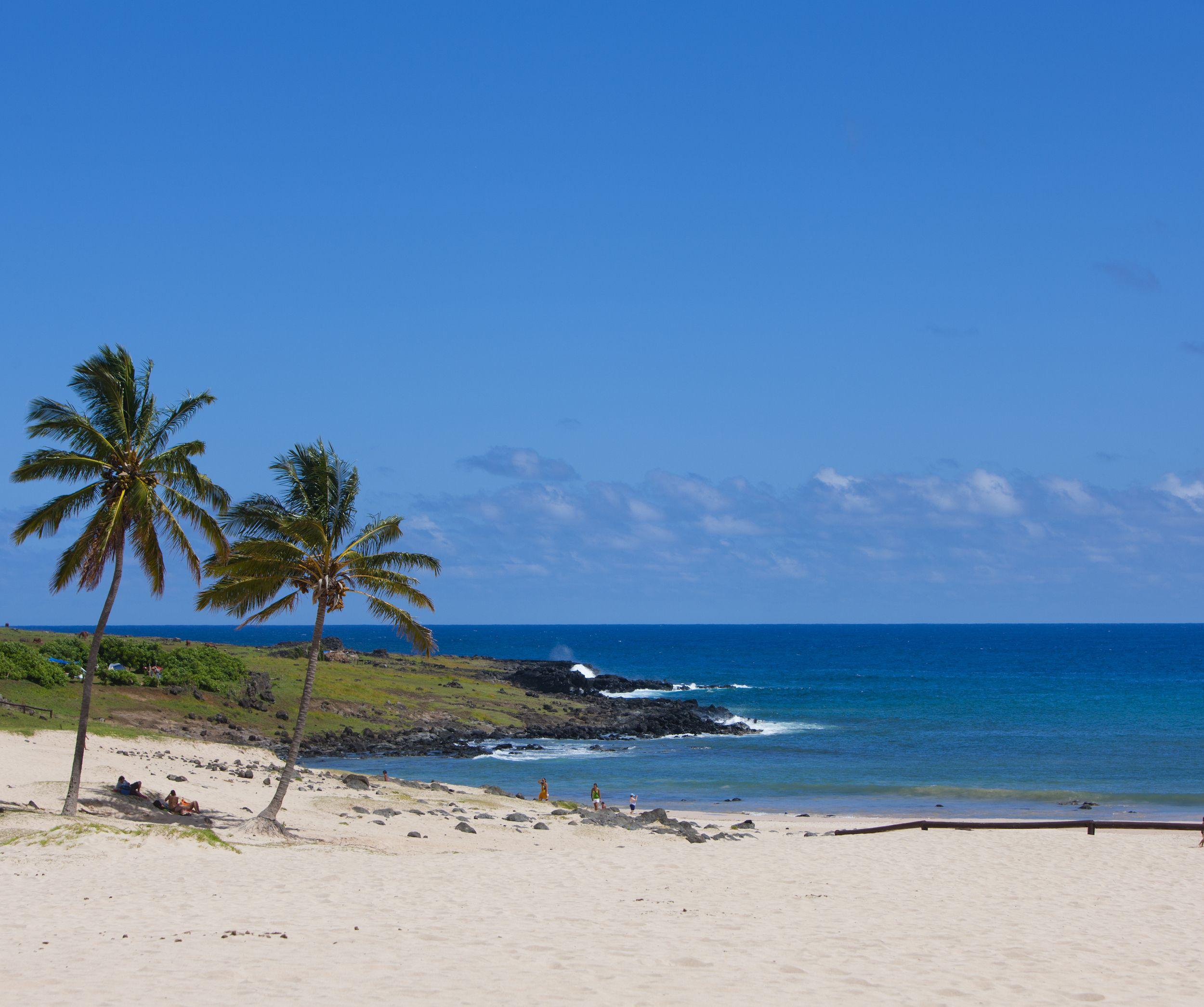
Anakena Beach, Easter Island ©Eric Lafforgue/Lonely Planet
Sign up for our newsletter! For you weekly travel tips, special offers, stories from around the world and 30% discount on your first order.
3 Relaxing on the beach at Anakena
Beach lovers looking for a place to bask in the sun will appreciate this magnificent white sandy beach, which also serves as the perfect backdrop to the Ahu Nau Nau, where there are seven moai, some of them complete with hairstyles. On a rise to the south of the beach stands the Ahu Ature Huki with its lone moai, which was put up in 1956 by Norwegian explorer Thor Heyerdahl with the help of a dozen islanders.
Here you will find, among other things, public toilets and stalls selling food and souvenirs.

The volcanic lake Rano Kau ©Skreidzeleu/Shutterstock
4 The ceremonial village of Orongo
Partly covered by a swamp of fluttering totora reeds, the volcanic lake Rano Kau resembles a witch's giant cauldron and is a magnificent display of endemic biodiversity. Lying 300 metres higher, on the edge of the crater on one side and, on the other, overlooking a vertical precipice that plunges into the cobalt blue waters of the ocean, the ceremonial village of Orongo offers one of the most incredible landscapes in the South Pacific. It overlooks several small motu (islands off the coast), including Motu Nui, Motu Iti and Motu Kao Kao.
Built into the side of the slope, the houses have walls made of stone slabs stacked horizontally, with an arched roof made of similar materials and covered with earth, giving the impression of being partially buried. In the 18th and 19th centuries, Orongo was the centre of a cult that worshipped a bird-man linked to the god Make- make, which spread throughout the island. Petroglyphs depicting the bird-man can be seen on a group of boulders located between the top of the cliff and the rim of the crater.
Orongo can be reached by a steep ascent or by a short 4-kilometre scenic drive from the centre of Hanga Roa.
Recommended guides and products:

Travel guide
Chile and Easter Island
5 Excursions along the North Coast
There are several paths on the island that lend themselves magnificently to hiking. An unforgettable walk is the Ruta Patrimonial, which leads from the Museo Antropológico Sebastián Englert up to the ceremonial village of Orongo along the well-marked Te Ara O Te Ao trail (approx. 4 h, 7 km). Other beautiful routes are the ascent to Maunga Terevaka from the Ahu Akivi (about 3 h) and the hike to Península Poike (one day). For the hike between Ahu Tepeu and Anakena Beach on the northern coast (6 to 7 h, 13 km), it is best to use a guide because the path is not marked.
Bicycle
The bicycle is a wonderful way to visit the island. The loop route, which goes around the island following the south coast to Ahu Tongariki, passing Poike and touching down on Ana- kena before turning back to Hanga Roa along the central road, is 48 kilometres long. The coastal road is relatively flat, while there are some moderate climbs along the road through the centre of the island. You can break the route by spending the night at the Sustentable Ana Tekena campsite, near Anakena beach.
6 Diving at Motu Nui
On Easter Island, diving is an increasingly popular activity. The strengths of the island are the transparency of the water, which guarantees exceptional visibility (up to 50 metres), the absence of large crowds, the spectacular underwater depths and the abundance of pristine coral formations. The weak point is the marine fauna, which is rather scarce.
Diving can be practised all year round. The water temperature ranges from 20°C in winter to 26°C in summer.
The sites are mostly on the west coast. It is not necessary to have great experience: there are sites for all levels. Some of the most popular are Motu Nui, La Catedral and La Pyramide; the last two in particular are very scenic.
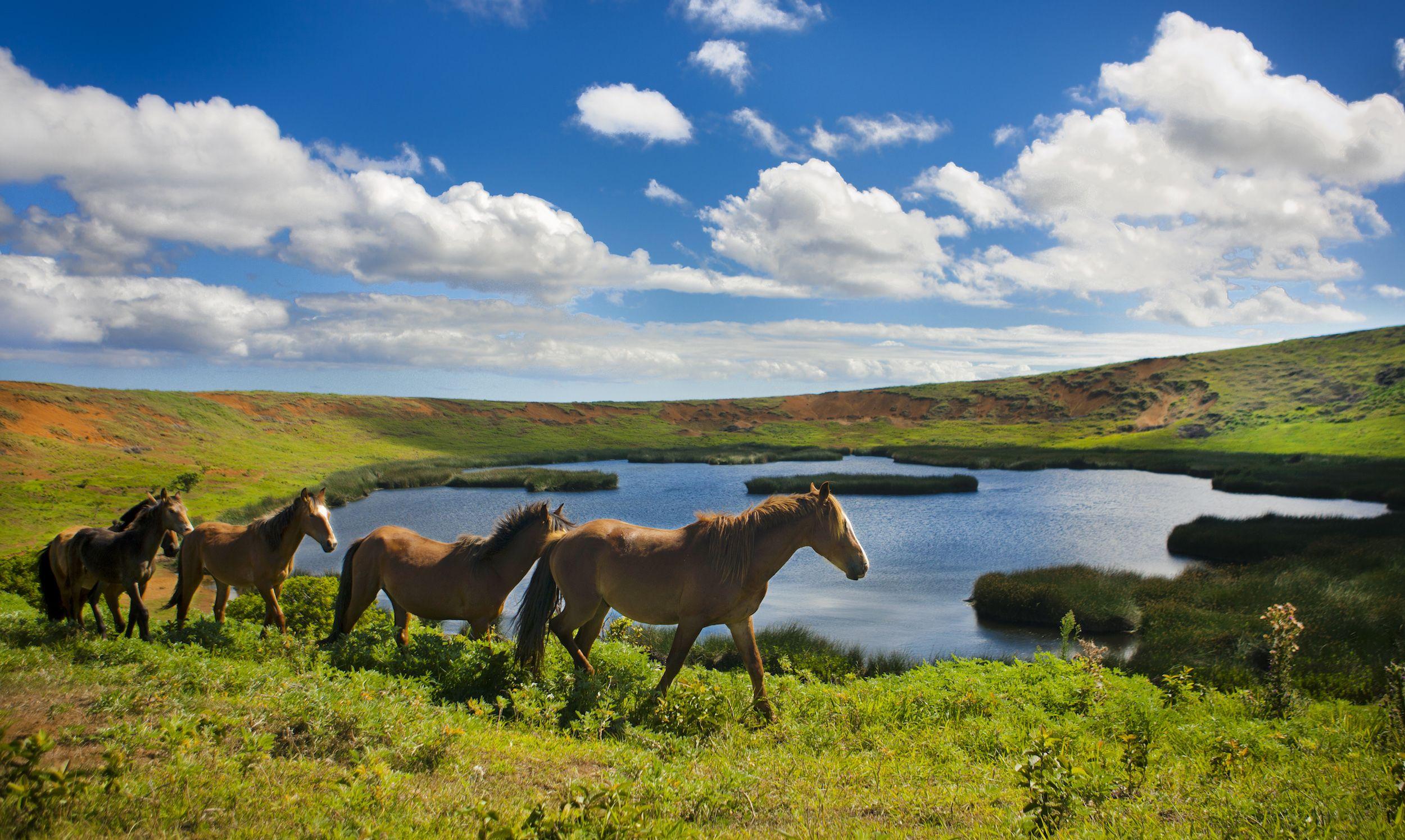
Horses on the slopes of the Rano Raruku volcano ©Eric Lafforgue/Lonely Planet
7 Península Poike
At the eastern end of the island, this plateau is dominated by the extinct volcano Maunga Pu A Katiki (400 metres) and surrounded by high precipices. There are also three small volcanic domes, one of which has a large mask carved into the rock resembling a giant gargoyle. It is also worth taking a look at the row of small moai that lie face down, hidden in the grass, and the Cave of the Virgins (Ana O Keke).
Legend has it that virgins were confined in this cave to ensure that their skin remained as clear as possible. If you are not afraid of heights, we recommend entering the cave (reached by a small path along a ledge, with the expanse of the Pacific stretching uninterrupted below you) to admire a series of petroglyphs.
The best way to observe the primeval nature of Península Poike is to go on a day trip with a guide, because the sights are hard to find.
8 Riding on the slopes of Maunga Terevaka
Maunga Terevaka is the highest point on the island (507 m) and the youngest of its three volcanoes. This barren hill is only accessible on foot or horseback and is well worth the effort for the sensational panoramic view.
How to get there
Byair The only airline serving Easter Island is LATAM, which operates daily flights to/from Santiago and one flight a week to/from Pape'ete (Tahiti).
By sea Five to six cruise ships pass through each year, mostly during the summer months. A few yachts also stop over on the island, usually in January, February and March. The mooring points are not well sheltered.
When to go
January - March High season. Peak rates and accommodation shortages during Tapati Rapa Nui (February) .
July - September Cool climate, not suitable for the beach but ideal for walking or horse riding.
April - June and October - December The in-between season is not a bad time, as the climate is fairly mild.
Published in May 2019