Kangaroo Island is a natural jewel in the Australian state of South Australia and an absolute must for animal lovers. Almost untouched by human civilisation, a unique paradise has developed here.
Kangaroo Island is located in the Australian state of South Australia and is the third largest island in Australia. It lies a good 100km southwest of Adelaide and has over 500 kilometres of coastline. Kangaroo Island has a mild climate, with average temperatures between a pleasant 13 and 25 degrees all year round.
In addition to Kangaroo Island, Australia has an abundant offer of remarkable places to visit that are equally unique and exciting. One such place is Byron Bay. If you're planning a trip, you may consider staying in one of the many idyllic hotels in Byron Bay http://www.newsouthwaleshotels.net/en/byron-bay-hotels-48788/.
The Australian holiday paradise is one of our tophotels.com. A visit to these locations provides an unrivaled experience of Australia's immense biodiversity and scenic landscapes.
PICTURES: Kangaroo Island
Photo gallery: Kangaroo Island
History of Kangaroo Island
Based on archaeological finds, scientists assume that Kangaroo Island was probably already populated by indigenous people 11,000 years ago, who disappeared again by 200 BC for reasons that are not completely clear. In 1802, the island was first set foot on by a British explorer, who also gave it its name.
The island was then settled by seal hunters who soon developed into farmers. Today, Kangaroo Island is inhabited by over 4,000 people. Just under half of them live in Kingscote, the first and now largest settlement on the island.
Breathtaking wildlife on Kangaroo Island
However, the main inhabitants of the island come from the animal kingdom. For nature lovers and animal lovers, a visit to Kangaroo Island is an absolute must! Kangaroo Island is often referred to as "Australia's Galapagos". More than half of the island has not been altered by man and is cloaked in magnificent untouched vegetation.
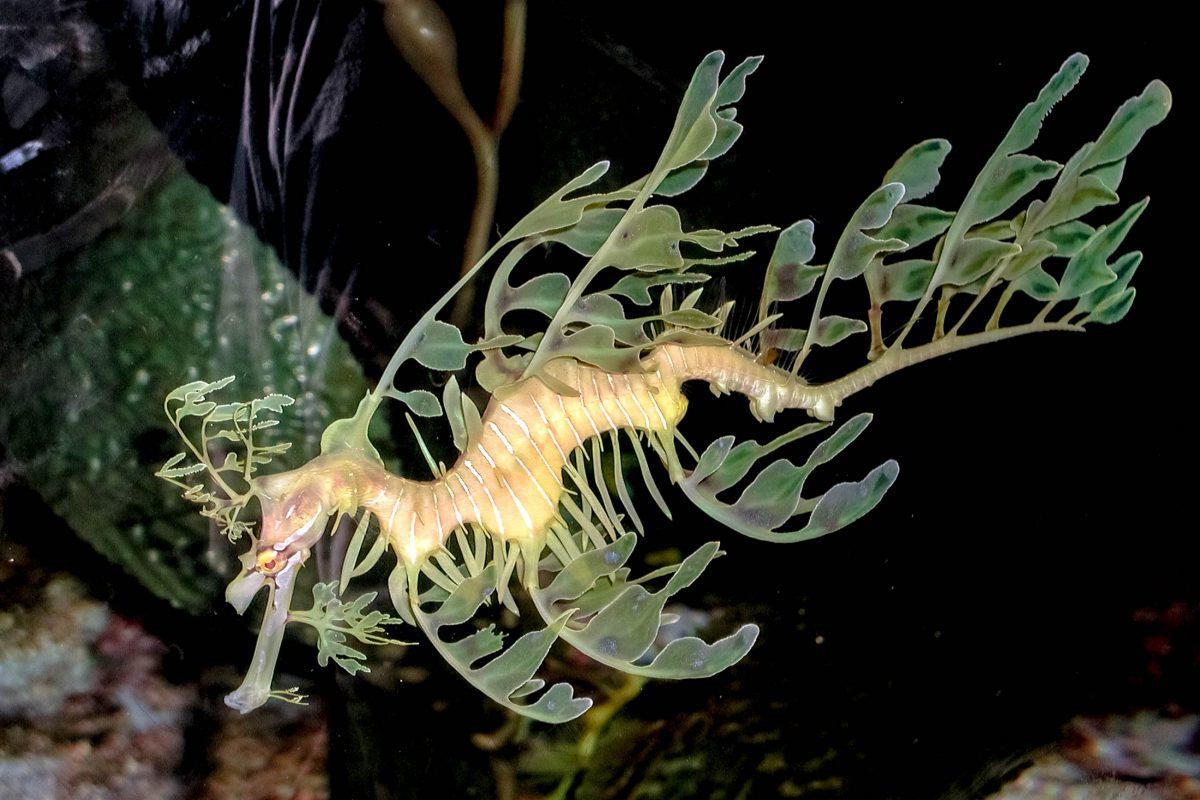
More than a third of Kangaroo Island is considered a wildlife or nature reserve. An incredible variety of creatures feel at home here. In addition to kangaroos, wallabies, various species of bats, penguins, sea lions and fur seals, kakakus, emus, koalas, the rare platypus and, of course, countless reptiles and insects populate Kangaroo Island. The sea is home to a curiosity related to the seahorses: the ragged fish. Anyone who has seen it knows why it is called that.
Places of interest on Kangaroo Island
Sea Lions at Seal Bay Conservation Park
In Seal Bay Conservation Park on the south coast of Kangaroo Island, rangers guide visitors through the local sea lion colony with up to 700 animals. The cute pygmy penguins on Kangaroo Island are best observed on the coast of Kingscote and Penneshaw, where there are guided tours of their nesting area even after sunset.
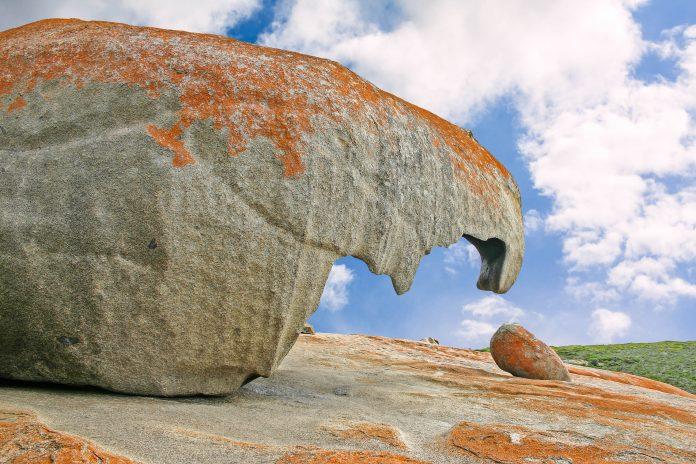
"Remarkable rocks" in Flinders Chase National Park

In Flinders Chase National Park, which covers 20% of the island, there are other remarkable attractions besides the animal ones: The so-called "Remarkable Rocks" are rocks artfully shaped by nature, in which, with a little imagination, the most bizarre things can be seen. Especially at sunrise, when no one else is there yet, a sensational experience!
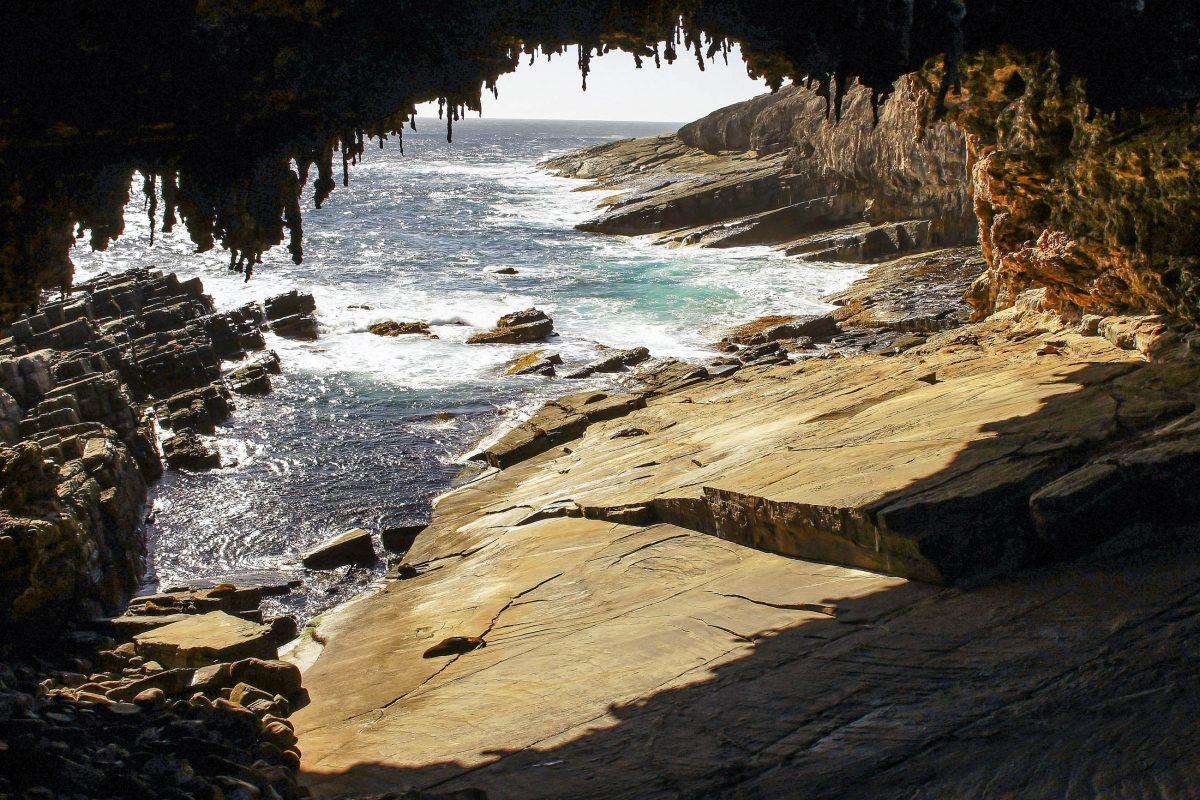
At Admiral's Arch, you can catch a glimpse of the lazy New Zealand seals resting on the beach from their strenuous foraging from an elevated walkway.
Flinders Chase National Park is also the best place to see the cute koalas live in the eucalyptus trees and the kangaroos are particularly friendly here.
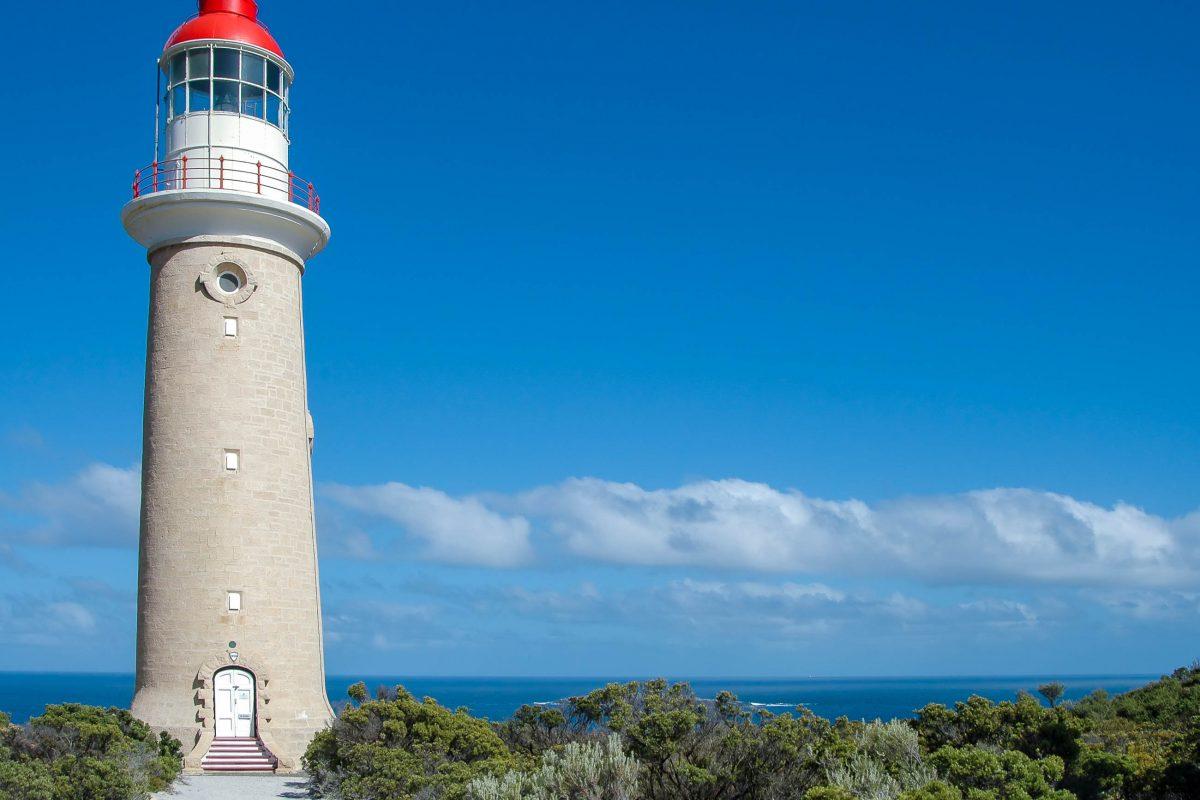
The vegetation here is also remarkable. In the centre of the Flinders Chase National Park, the trees are up to 8 metres high, towards the sea they become increasingly flatter until they have turned into only knee-high bushes on the coast - it seems as if the cold winds from Antarctica are shaving off the treetops. Cape Borda and Cape Couedic each have a lighthouse, which blend idyllically into the lush vegetation of Kangaroo Island.
Mount Thisby and "Little Sahara
If you want to get an overview of the island, it is best to climb Mount Thisby - it offers a perfect all-round view of the beautiful panorama.
Those who are not so keen on gazing into the distance are well catered for in the Kelly Hill Caves, where, apart from the fascination of the cave itself, you can also admire the bones of animals that are already extinct. There is also something for desert lovers: part of the south coast is also called "Little Sahara" because of its huge sand dunes.
Curious: Australians are very fussy about their ecosystem. That's why no honey can be brought to the island, potatoes must be in their original packaging and vines have to pass the quarantine station.
Accommodation and hotels in Australia
Interesting articles for holidays in Australia:
Sydney Opera House
The Australian Outback
Uluru (Ayers Rock)
Twelve Apostles on the Great Ocean Road
Coober Pedy
Kings Canyon in the Northern Territories