The Complexities of Traveling to Saudi Arabia

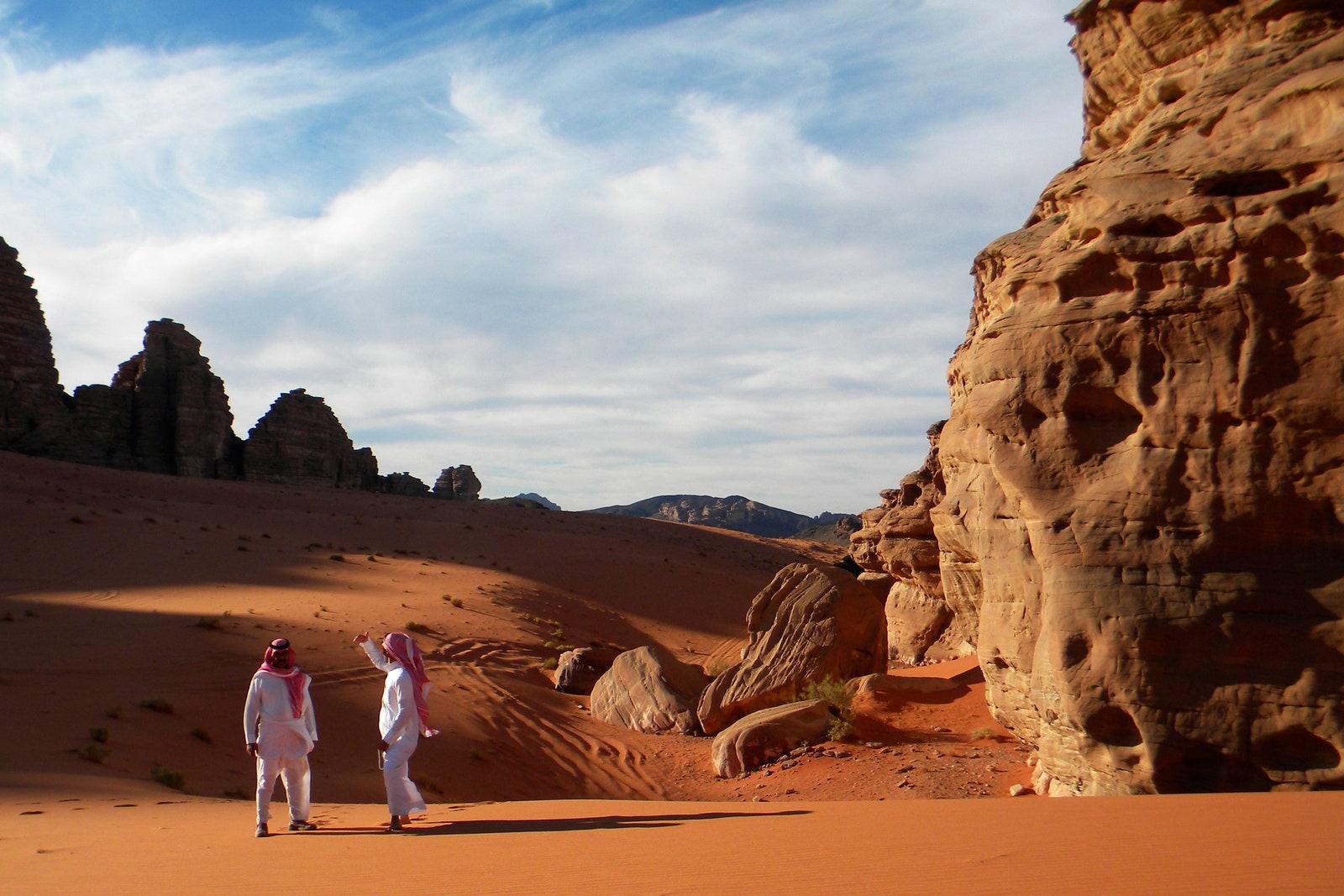
The Kingdom of Saudi Arabia, the Middle East's prominent terrain, is known for its sweeping diversity in landscapes and rich historical background. From the remnants of the ancient Nabatean Kingdom nestled in Al-'Ula to the expansive Rub' al Khali desert, there's an air of mystique and natural beauty that engulfs the nation. Jeddah's luxurious beach resorts, together with the elevated mountains of Taif producing the world's most coveted dates alongside blooming roses, further enhance this allure. Riyadh, the capital city, is an intriguing mix of the past and the present, boasting traditional souks contrasted against contemporary skyscrapers. A short drive from the city takes you to the captivating cliffs of the Edge of the World park.
Despite the country's cultural richness and scenic beauty, Saudi Arabia remains comparatively unexplored by American tourists. However, the country is making efforts to alter this perspective and invite more visitors to experience its unique blend of history, nature and modernity.
Prior to 2019, the Kingdom of Saudi Arabia only authorized visas for those on professional assignments or on religious journeys to the holy city of Mecca. Strict regulations and dress codes were in force, with the Islamic religious police, or mutawa, having the authority to detain individuals for activities like playing music, having an excessive amount of makeup on, or publicly socializing with someone of the opposite sex. This however, began to shift in 2017 with the ascension of Mohamed bin Salman to the role of Crown Prince. He implemented an expansive modernization initiative called the Saudi Vision 2030. This project aimed not just at modernizing the country's societal norms, but also at moving the economy away from being heavily reliant on oil.
The mutawa's authority dwindled, marking an unprecedented change in women's rights, notably when women were granted the freedom to apply for driving licenses - a first in the nation's history. To enhance social life, movie theaters were established, and global music festivals were organized. Importantly, in a significant development for global tourism, Saudi Arabia broadened its visa regulations, making tourist visas available for nationals from 49 countries, including the United States. This was a strategic development, indicating Saudi Arabia’s intention to present itself as a global tourism destination.
Experiencing an exhilarating period of transformation, the Kingdom of Saudi Arabia is providing its younger population and foreign travelers augmented opportunities for public social interactions, shredding years of segregation. The phenomena, coined as the "new Saudi Arabia", is vividly captured and propagated worldwide through the powerful tool of social media, a strategic move of the colossal promotional endeavor undertaken by the Ministry of Tourism. This venture involves funneling at least $800 billion by 2030 into an array of projects; from enhancing transportation systems to the creation of unprecedented, futuristic cities. The grandeur and ambition of this plan speak volumes about Saudi Arabia's vision for a vibrant, globally integrated future.
The allure of the recently accessible Saudi Arabia is undeniable. Yet, it's crucial to understand the landscape of local traditions, laws, and regulations before planning your journey. Noticeably, the country still exhibits a considerable difference in gender roles, retains strict laws against alcohol consumption, and has tight regulations around the expression of LGBTQ+ identities. For instance, men must not don women's attire as per the 'Decency Mandates', and transgender individuals may face challenges if their passport gender markers contradict their identity – potential barriers for entry into the land.
Furthermore, it may appear that these restrictions are not stringently observed. However, it's worthy to note that the government is known to consistently track social media accounts of tourists and adherence to the local laws, customs, and norms are anticipated throughout one's stay. Therefore, it's essential to prioritize the understanding and respect of these local ordinances to ensure a smooth and enjoyable visit to the Kingdom of Saudi Arabia. It is an authentic encounter with these dynamics that completes and enriches the Saudi Arabian experience despite the complexities involved.
Some Americans are confronted with significant cultural differences when considering a trip to Saudi Arabia. This feeling of unease is acknowledged by Justin Francis, Responsible Travel's co-founder, and CEO. Despite this, Francis remains optimistic about the prospect of responsible travel to nations with challenged ethical standings. He asserts his belief that conscientious travel is achievable even in regions grappling with issues related to environmental sustainability, animal protection, and human rights. As Francis points out, few, if any, destinations can boast an unblemished record in these important areas.
Professor Anu Taranath, a consultant on racial equity and the author of 'Beyond Guilt Trips: Mindful Travel in an Unequal World', advocates for a broader perspective on travel choices. According to Taranath, good-hearted Americans often struggle with the decision to visit countries where they are aware of certain societal issues. Interestingly, she notes, similar discussions are seldom held in relation to domestic travel, despite America's own struggles with preserving the dignity of its Black population. This point emphasizes the importance of self-awareness and internal dialogue when considering various travel destinations.
Traveling can be an enlightening experience, a rare chance to exploit the opportunity to broaden your horizons and gain a deeper understanding of diverse cultures and ways of life, as emphasized by our anonymous travel enthusiast. She perceives travel as a privilege, a doorway to compassionately explore and gain insights into the lives that starkly differ from her own.
Intrepid's co-founder and chair, Darrell Wade, ventured into the heartland of the Kingdom last year. While he found it not entirely prepared in terms of the required amenities for his company's organized expeditions, he personally appreciated the experience and would gladly visit again. He sees the unfolding of tourism in Saudi Arabia as potentially beneficial for both the locals and visitors. Wade is a firm believer that travel inevitably cultivates positive changes, enabling a mutual exchange of knowledge and enriching experiences among travelers and their hosts.
Making a choice to journey into a country where the legal and cultural norms may diverge from your own could be a deeply personal decision. If Saudi Arabia is on your travel bucket list, there could be few potential concerns and logistical aspects American travelers might ponder over, which we touch upon in the forthcoming sections of the article.

Progress in Women’s Autonomy and Dress Code
In a remarkable shift towards a gentler interpretation of Islamic regulations, the year 2018 witnessed noteworthy changes in women's rights in Saudi Arabia, such as the authorization for women to drive, obtain a passport, travel overseas, reside independently sans a male guardian's approval. Interestingly, they're also no longer obligated to don the hijab, abaya, or niqab. However, certain decorum pertaining to modesty are still in place. While these transformations predominantly loosen the societal constraints on local women, tourists are encouraged to adhere to most rules. Additionally, despite these significant changes, Saudi Arabia still needs serious improvement in the women rights sector, as ranked by the World Economic Forum's Global Gender Gap Report 2021. Furthermore, it is noteworthy to remember that rules might fluctuate, hence staying updated about the current laws and regulations is crucial when planning a trip to the country.
Visiting Saudi Arabia, as both locals and tourists, requires clear understanding and adherence to the regulations that define modesty within the country. While many Saudi women in bigger metropolises elect to sport an abaya, a significant percentage have opted out of any type of head covering. When it comes to entering a mosque, the rules are clearly detailed: individuals must bear no footwear and are expected to be decently covered from ankles to wrists. Women are also advised to wear a head covering while in these sacred spaces.
The regulations concerning attire do not distinguisah between genders. Women are generally advised to dress in oversized clothing that conceal skin areas above the knee and elbow. Conversely, men should refrain from taking off their shirts or offend sensibilities by wearing sleeveless shirts. Shorts are a bit of a rarity for both genders in Saudi Arabia and are generally uncommon.
Failure to uphold these dress guidelines could potentially lead to a fine of 100 SAR/$26, which doubles in case of repeated violations. This penalty doesn't only apply to revealing attire or outfits bearing inappropriate emblems or statements. The rules also forbid any behavior or action promoting any other religion besides Islam. Therefore, the display of any religious symbols like a crucifix should strictly be refrained from.
When Saudi Arabia commenced its issuance of tourist visas in 2019, among the front-footers to explore the Kingdom was Olga Aymerich, who serves as a research officer with the United Nations in Iraq. During her visit, she observed a significant diversity in the dressing styles of women, that changed dramatically across the neighborhoods within bustling cities such as Jeddah and Riyadh. In an effort to blend in and not draw attention, Aymerich chose to wear an abaya, a traditional Saudi attire, open or closed style, over her regular clothes. "This decision stemmed from a desire to feel at ease," stated Aymerich, noting that she wore head coverings only when visiting religious sites.
In her informative blog post on The Traveling Quinn, Ellie Quinn shares her advice for female tourists visiting the Kingdom. She recommends acquiring an abaya, the traditional robe-like attire, before visiting or purchasing one from a local mall upon arrival. High-quality, black abayas made from breathable materials can be found for about $25 (100 SAR), but there are also vibrant and patterned versions if you seek something less conventional.
The Saudi Arabian beach scene is one of nuances. Public beaches often enforce gender segregation, creating different swimming expectations for women and men. Women often opt for burkinis, a more modest swimsuit option, or swim in their abayas, while men are expected to remain fully clothed. However, a rising tide of private beaches are letting go of rigid dress code rules, enabling guests to enjoy their leisure time in bikinis and swim trunks. Wherever you plan to sunbathe or cool off, research or call ahead to understand the dress code, particularly as some beaches in Jeddah eschew the traditional abaya completely.
Observation of Gender-Specific Spaces
Despite the recent relaxation in gender rules, allowing males and females who are non-relatives to mingle in public areas such as shopping malls and cafes, distinct spaces based on gender continue to exist. The likes of women-exclusive gyms to eateries in remote towns that insist on separate entrance and eating sections for families and males testify to this situation.
During a recent sojourn at the esteemed Ritz-Carlton Riyadh, Wade and his spouse encountered this gender-based distinction first-hand. The couple discovered that the hotel's swimming pool and spa facilities were reserved solely for men. Wade's queries about potential exclusive access times or alternate amenities for women were met with negation. However, Wade expressed optimism for the evolving dynamics, given the exciting prospect of increased international visitors.
As public interactions between men and women are slowly becoming normalized, physical affection between couples still needs to be kept strictly behind closed doors. That means avoiding touching of any kind between opposite genders when in public. Holding hands, kissing, or hugging in public are considered “acts of a sexual nature,” and could incur a 3,000 SAR fine (about $800) for the first offense and a 6,000 SAR for a repeat offense. It is one of 19 public decency offenses punishable by fine, along with things like failure to pick up after your pet (100 SAR/$26) and littering or spitting (500 SAR/ $133).
When meeting someone of the opposite gender, it is customary to place a hand to heart, rather than extending it for a handshake. Conversely, those of the same gender will often greet one another with a hug or a kiss on each cheek. In Bedouin tradition, some men touch noses. Visitors should follow the lead of the local.
Considerations for LGBTQ+ Travelers
In the kingdom of Saudi Arabia, laws and social norms starkly differ from many western societies, especially when it comes to the subject of LGBTQ+ rights. Notably, the kingdom neither acknowledges nor permits same-sex marriages. Moreover, behavior interpreted as homosexual or actions deemed as transgressing public order and religious norms can face legal consequences. Considering the kingdom's strict policies, LGBTQ+ travelers should maintain a low digital profile. This includes making their social media profiles private to avoid potential legal issues as the kingdom's cybercrime law might interpret public displays of same-sex relationships as an offense.
Some individuals might wonder what could possibly draw LGBTQ+ travelers to any of the 69 countries recognized by the U.N. which criminalize homosexuality. Yet, Stefan Arestis and Sebastien Chaneac are two such individuals who are not just drawn but have journeyed to numerous such countries including, but not limited to Singapore, Malaysia, and Dubai. They run an influential travel blog known as The Nomadic Boys aimed at motivating and guiding gay travelers. Their conversations, interestingly, now revolve around whether or not to set foot in the Kingdom of Saudi Arabia, a debate that ensues between the two.
Contradicting conventional beliefs, Arestis emphasises, “An automatic response would typically be something akin to ‘God, I would never conceive of visiting a place that potentially risks imprisonment just for being myself; it's better to boycott those regions and devote my hard-earned money on a place that embraces me’. However, adopting such a mindset might inadvertently inflict more harm than anticipated. It's often substantially more beneficial to step out and fortify the local LGBTQ community."
Chaneac expresses uncertainty about the safety of marginalized groups in Saudi Arabia, particularly those who identify as LGBTQ+. Although the rise in tourism could potentially increase the visibility and acceptance of this population, she also ponders about their legal protections abroad. "The surge in tourism can potentially play a significant role in transforming societal norms," Chaneac states. "However, for individuals who identify as LGBTQ+, the reassurance of having the law as their safety net is a critical consideration."
Arestis, on the other hand, points out the stark difference in the situation for these groups in Saudi Arabia, as compared to other places like Dubai that criminalize homosexuality. Unlike Dubai, where tourists can often circumvent local prejudice, Saudi Arabia's stringent penalties present a real threat. "In Saudi Arabia, the consequent penalties of violating local laws are not only stringent but also strictly enforced, making the situation considerably precarious for LGBTQ+ travellers," Arestis advises. "It's wiser to remain discreet about one's sexual orientation."
Renowned for his courageous journey, Parvez Sharma, an openly gay Indian-American filmmaker, found himself journeying to Saudi Arabia with the sacred mission of fulfilling the hajj. In his widely appreciated 2015 documentary titled A Sinner in Mecca, he magnificently captures this spiritual journey. In his perspective, though he found the pilgrimage to be deeply moving and crucial for his faith as a Muslim, he maintained a distinction between this religious trip and standard tourism.
"Undertaking the pilgrimage is an immense personal undertaking for many Muslims. It's a deep-rooted vow that compels us to put aside any reservations we may hold about the Saudi government and instead concentrate on the spiritual significance of the trip," elucidates Sharma. His commitment to fulfilling this religious duty is so profound that he would not consider traveling to Saudi Arabia if it weren't for this obligation.
The private nature of Saudi society and its conservative norms render certain inquiries regarding personal life inappropriate. Among these topics is sexual orientation. Arestis attests to the existence of a blossoming, albeit concealed, gay scene in Saudi Arabia, that could provide an interesting perspective for visitors. He advises discretion for those considering a visit, especially for non-public figures who can conduct their affairs with privacy. Tool like setting their social media to private and having a counterfeit girlfriend as a contingency could help maintain appearances. Nonetheless, it is crucial for visitors to familiarize themselves with the local customs and laws. Acts such as public displays of affection with the same gender can carry consequences, and Muhafazah (law enforcement) is unlikely to intervene for protection in these circumstances."
Journalism, photography, and freedom of speech
Put simply, Saudi Arabia is a monarchy, where democratic principles of freedom of press and speech do not apply. According to Reporters Without Borders, a group that advocates for press freedom around the world, over 30 editors, writers, and photographers are currently imprisoned for statements in articles, photographs, and even social media posts that were seen as critical of the government. American intelligence agencies have concluded that the government of Saudi Arabi orchestrated the murder of U.S.-based Saudi journalist Jamal Khashoggi, a notable dissident of the regime.
Travelling to the Kingdom of Saudi Arabia can be an enriching experience, but it also calls for an understanding and adherence to local customs and guidelines. Reflecting on the prevalent norms, it's imperative to abstain from criticizing the government, the royalty, or the Islamic faith in any form, be it in spoken words or across social platforms. Discussing sensitive subjects such as politics, faith, and intimacy in public or cyber spaces are frowned upon. As a visitor, maintain a decorous demeanour, and avoid any provocative language or gestures, violation of which might result in fines.
Emphasizing on the etiquettes, Francis advises, "Remember, you're a visitor. By choosing to travel here, you've committed to honouring the country's rules. Inquisitiveness is natural, but the concept of freedom of speech doesn't stand in the Kingdom, implying that you could complicate situations for locals by probing queries".
An especially prevalent legal pitfall in the kingdom that catches visitors off guard is unsanctioned photography; snapping images of an individual (of particular note is photography involving women), along with capturing visuals of accidents or unlawful acts, is considered a violation of the law. Offenders could face substantial monetary repercussions to the tune of 1,000 SAR (equivalent to $266). Highly-populated regions like traditional marketplaces are critical places of vigilance, as the dynamic setting might lead to unintentional photography of individuals.

Other things to keep in mind when planning a trip to Saudi Arabia
Restrictions for non-Muslim visitors
Mecca is the one city that remains off-limits to non-Muslim tourists. Mecca and Medina are the two holiest cities for Muslims who visit for the Umrah and Hajj pilgrimages. The latter is obligatory for every Muslim who is financially and physically able to make the trip, so roughly 2 million pilgrims travel to Mecca for the Hajj each year, and these visits require a religious visa.
Many of these pilgrims choose to stay in Medina before or after their pilgrimage. There are plenty of hotel deals in Medina on www.hotels-saudi-arabia.com to make the journey more comfortable.
For other travelers interested in visiting a religious site, Jeddah is a better option, as it is home to the only four mosques in the country that allow non-Muslim visitors to enter: Al Taqwa Mosque, the Al Rahma Mosque on the Red Sea, Moroccan-style King Fahd Mosque, and the King Saud Mosque, a nearly 10,000 square meter structure designed by Egyptian architect Abdel Wahed Al Wakil, who is considered the most prominent living authority on modern Islamic architecture.
Observing Islamic Prayer Timings and Ramadan Practices
In Saudi Arabia, it's common for several establishments such as eateries and retail outlets to temporarily cease operations for approximately a quarter to half an hour during the occurrence of the five daily prayers, although recent legislations offer some room for certain places to continue operating during these times. Each day's prayer timings are dictated by the solar cycle and thus, they vary throughout the year. Therefore, to adapt to the local schedule, it would be beneficial to keep track of these timings by referencing the day's prayer hours either online or via a local newspaper. Interestingly, the law prohibits playing music during the prayer spells, whether in private areas such as homes and cars or public places.
Travelers are advised against visiting during the holy month of Ramadan as consuming food or beverages, or even smoking in public spaces from dawn until dusk is strictly forbidden. During this period, numerous stores and dining outlets are likely to be closed during daytime or may have reduced operational hours. Even some tourist hotspots may remain closed for the duration of Ramadan. Interestingly, the commencement and conclusion of the fasting period of Ramadan shifts annually as it is determined by the lunar calendar.
Prohibition of Alcohol and Nightly Activities
Contrarily, the nightlife scene in Saudi Arabia is starkly different due to the prohibition of alcohol. Nevertheless, the cities assume a vibrant personality post twilight, teeming with an assortment of activities. You'll find an array of coffee houses, shisha lounges, and dessert parlors buzzing with activity well into the early hours of the morning, often until 2 a.m. or later. It's not an uncommon sight to see families leisurely strolling along the corniche or enjoying evening picnics in the city parks. Shopping malls are a hive of activities, and most dining establishments keep their doors open well beyond conventional hours to cater to the country's late-night social scene.
The role of a local guide
The intricacies of Saudi Arabia's rich history, cultural nuances, and breathtaking landscapes are best appreciated with insights from a local guide who can familiarize you with the region's customs. Fluency in Arabic isn't essential, thanks to the skilled local guides in the country, and top hotels often offer a roster of recommended guides for hire, adding another layer of ease to your travel planning. A refreshing idea proposed by traveller expert, Aymerich, is hiring distinct tour guides in each of your travel stops in order to gain diversified, authentic insights about the region. Also, if unhappy with a guide's service, you won't be bound to them for your whole journey. Besides the rich knowledge they provide, these local guides can organize your transport to remote and exotic locations for a broader Saudi exploration experience.
One travel avenue that deserves highlighting is the initiative taken by Nada al Nahdi, a Yemeni-Indonesian travel blogger raised in Saudi Arabia, and local organizer Esraa Rayes. They have diligently worked to simplify travel in Saudi Arabia for single female explorers by arranging group journeys through their organization, Qairawan, which is an absolute game-changer in the domain of female tourism in the Kingdom.
Visas
Due to the pandemic, there are no more visas issued on arrival, but e-visas are quickly approved for American travelers. The online application includes the option to purchase mandatory insurance for 140 SAR/$37 and pay the visa fee of 300 SAR/ $80. The e-visa typically is emailed within minutes and is valid for one-year with multiple entries and stays of up to 90-days at a time. (Proof of vaccination and a negative PCR test, taken no more than 72-hours prior to traveling to the Kingdom, are also required as of January 2021.)
“The visa process was so easy, but that was the only thing that was well organized,” Aymerich said, adding that visitors should be prepared to be amenable to changes in their itineraries once they're in the country. “You need to be flexible, willing to ask people for advice, and a little bit lucky. If you are looking for an easy trip, this isn’t it—but if you’re ready for an adventure, to experience new things, there is so much to see in Saudi Arabia, and the people are wonderful and excited to share their culture.”